

What is the function of Perspirometer?
An ideal healthcare system provides health monitoring and treatment before disease onset. When a patient exhibits undesirable health conditions, the system is able to detect and address the problem. Therefore, there is an urgent need for a method that allows individuals to monitor themselves without the need for expensive equipment or the involvement of trained professionals, enabling early detection and timely management of diseases.
With the development of medical diagnostic technologies, the field of wearable biosensors is growing, offering innovative solutions to current medical problems. In recent years, wearable electronic devices have rapidly developed, providing continuous, real-time physiological information through dynamic, non-invasive measurements of biochemical markers in biofluids. They can accurately measure vital signs such as heart rate, body temperature, and blood pressure, helping to characterize and monitor individual health. Biofluids (such as sweat, tears, saliva, or tissue fluid) are analytes due to their ease of sampling and show the potential to provide continuous, real-time physiological information by understanding the deeper biomolecular state of the human body.
Compared to other biofluids, sweat contains a wealth of analytes that can convey physiological information about the body and are closely related to blood levels, offering significant advantages for wearable sensing. Since the first proposed wearable sweat sensor for real-time lactic acid analysis in 2013. monitoring of electrolytes, metabolites, drugs, and trace elements in sweat has been gradually realized.
Sweating is the mechanism by which sweat glands in normal adults produce trace amounts of fluid under various temperature conditions. Sweat is a product of sweat gland activity, easily obtained from the skin surface, and contains abundant biochemical data, including electrolytes (such as potassium and sodium ions) and metabolites (such as glucose and lactic acid). Sweat is a very important biofluid because, compared to other biofluids such as blood, it can be collected using non-invasive techniques.
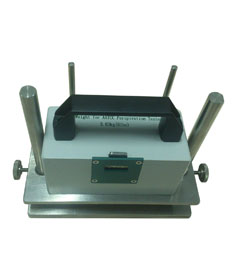
Working Principle
The working principle of a Perspiration Tester is to simulate the process of fabric being soaked in sweat during human skin exercise and perspiration. It uses a constant-temperature water bath and chamber to simulate human sweat with a specific solution, then soaks the fabric for a certain period. Afterward, the soaked fabric is squeezed and dried, and finally, its color fastness is assessed by measuring the color difference value. The color difference value represents the difference between the sweat and the fabric color; based on this difference, the colorfastness of the fabric under sweat can be determined.
Common Sweat Analytes
Sweat biosensors have wide applications in various fields such as healthcare. They typically analyze electrolytes in sweat, such as chloride, potassium, and sodium. While sodium is a good biomarker for electrolyte imbalance, there is currently no clear information indicating a link between sweat sodium and blood. However, recently, sweat sodium has been used to establish a link between local sweat levels and electrolyte loss and overall body fluid status. The correlation between sweat potassium and blood needs further confirmation, while chloride in sweat has been shown to be of significant value in detecting cystic fibrosis.
Urea and lactic acid are also abundant in sweat, but they do not show a strong correlation between blood and sweat. Because sweat itself produces a significant amount of lactic acid, it is difficult to determine the correlation between sweat lactic acid levels and blood lactic acid levels. Although the status of lactic acid in sweat cannot yet be specifically linked to the systemic environment, it can at least be linked to the level of sweat gland motility based on the systemic environment. Urea levels in sweat can be used to monitor abnormal kidney function, and white crusting can be seen on the skin of infected patients. Recently, wearable flexible sweat sensors have been able to measure ethanol and calcium levels in sweat.
Types of Sweat Sensors
Various unique sweat-based biosensors have been designed for physiologically significant measurements and other research. The basic principles of electrochemical sweat sensors, ion-selective electrode sweat sensors, and wearable sweat sensors will be detailed below.
Electrochemical sweat sensors typically consist of three to four electrodes fabricated on a flexible substrate: a cathode, a reference electrode, a counter electrode, and a working electrode. The reference electrode has a constant and defined potential and serves as a half-cell to determine the potential of the second half-cell, the working electrode. Reference electrodes are generally made of silver/silver chloride, with a known voltage range between 0.20 V and 0.25 V.
Ion-selective electrode sensors are devices that convert specific ionic behaviors (e.g., ions dissolved in a liquid) into a readable signal. Using electrochemical equations (Nernst equations), the voltage can be correlated with the logarithm of the selected ionic behavior, thus achieving selectivity through a direct potential method. In addition to using the ion-selective electrode as the working electrode, a reference electrode is also required. Ion-selective electrodes primarily come in three configuration types: liquid membranes (where ions can move and exchange), solid membranes (where the ion exchange site is fixed, such as crystals and glass), and membranes used as special electrodes (e.g., membranes for sensing gases).
Wearable sweat sensors can be broadly categorized into flexible and non-flexible types. For applications that collect physiological data from sweat, wearable sweat sensors should be placed close to the skin for ideal in vivo processing and detection, while also maintaining a robust fit and ease of wear. To achieve this analysis, wearable flexible sensors are typically chosen, allowing for non-planar contact with human skin. Recently, with advancements in wearable flexible sensor manufacturing technology, signal processing circuitry has been integrated and embedded, enabling real-time data analysis and wireless transmission to smart devices or computers. In terms of wireless data transmission, Bluetooth has become a popular technology compared to other wireless modules such as Zigbee and Wi-Fi due to its relatively low installation cost, lower hardware requirements, and good compatibility.
Applications
Sweat analyzers have a wide range of applications.
In health monitoring, it can accurately monitor and assess a patient's physiological state, clearly showing changes in electrolyte and metabolite concentrations;
In disease diagnosis, it assists doctors in diagnosing diseases such as cystic fibrosis and diabetes by utilizing specific chemicals in sweat;
In drug monitoring, it can detect the use of therapeutic and illicit drugs;
In exercise monitoring, it can assess an athlete's training intensity and physical recovery status; in the consumer products field, it can also be used for related experimental evaluations.
In conclusion, sweat analyzers, leveraging the rapid development of wearable biosensor technology and the abundant analytes in sweat, demonstrate immense application potential and value in numerous fields, including health monitoring, disease diagnosis, drug monitoring, exercise monitoring, and consumer product evaluation. With continuous technological innovation and improvement, they are expected to further integrate into people's daily lives and the healthcare system, providing more convenient, accurate, and efficient solutions for personal health management and medical diagnosis, and propelling the healthcare system towards a more ideal direction.