

FAQs About Conveyor Needle Detector
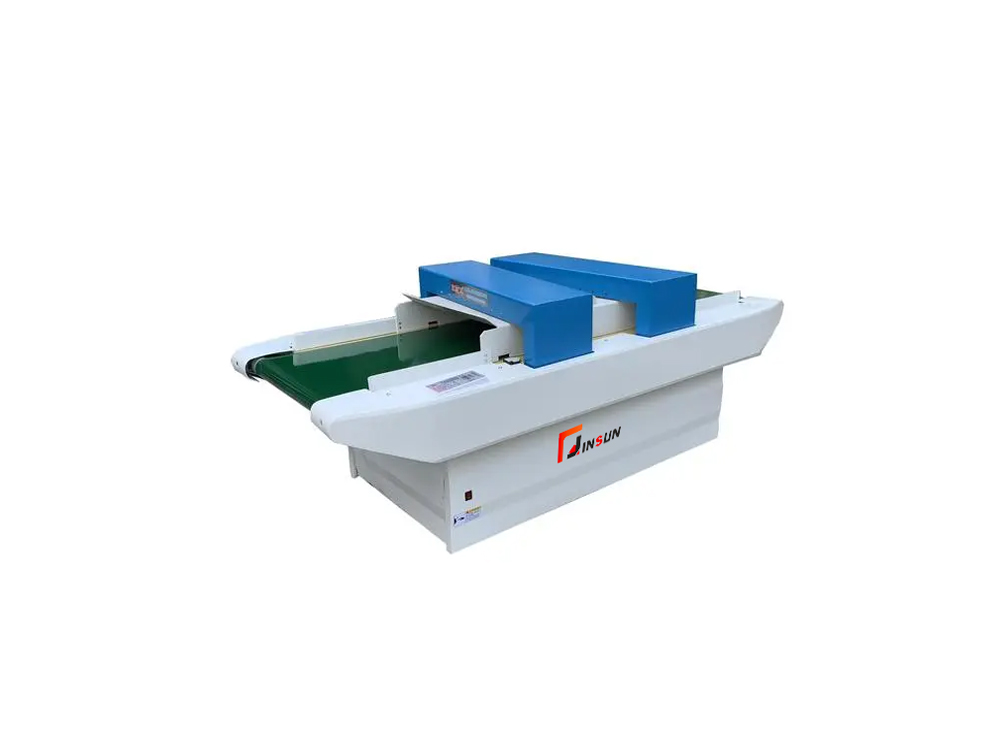
Conveyor needle detector is applicable to detect broken needle and iron matters inmany industries such as garment, textile, shoes and hats,home textiles, quilting etc. Here are some FAQs about the Conveyor needle detector.
FAQ1:How to Choose the Right Test Probe Head Type?
Choosing the right test probe head type is a complex and crucial process that requires considering multiple factors. Below is a detailed introduction to various aspects of test probe head type selection:
1. Measurement Accuracy
- High-precision testing requirements: For high-precision testing, a finer probe head type is usually required. For example, pointed probes offer higher measurement accuracy and are suitable for measuring convex, flat test points.
- Low-precision testing requirements: If high accuracy is not required, simpler probe head types can be chosen, such as umbrella-shaped or round-headed probes. These head types can meet most testing needs while ensuring a certain level of accuracy.
2. Test Point Shape
- Convex flat test points: For convex flat test points, pointed probes are the best choice because they can accurately contact the surface of the test point.
- Concave test points: For concave test points, nine-claw or three-pin probes may be necessary. These head types can better adapt to the shape of the concave surface and ensure good contact.
3. Testing Environment
- High Temperature and Humidity Environment: In high temperature and humidity environments, probe tips with good heat and humidity resistance should be selected to avoid testing errors caused by environmental factors.
- Vibration Environment: In vibrating environments, probe tips with a robust structure and strong vibration resistance should be selected to ensure testing stability and accuracy.
4. Testing Requirements
- Long Lifespan Requirements: If the test needs to be performed for a long time, probe tips with good wear resistance should be selected to extend the probe's lifespan.
5. Common Probe Tip Types and Applicable Scenarios
**Pointed Probe:** Suitable for measuring convex flat surfaces or surfaces with oxidation.
**Umbrella-Shaped Probe:** Suitable for measuring holes, flat surfaces, or concave test points.
**Crown Probe:** Similar to the flat probe, but may offer higher measurement accuracy.
**Nine-Claw Probe:** A universal probe tip suitable for various types of contact points.
**Round Probe:** Generally used for measuring closely spaced, convex, or flat test points.
Flat-tip probe: Primarily used for contacting solder pads and gold fingers; it will not damage the contact surface and will not leave any marks.
Cup-shaped probe: Primarily used for contacting connectors and winding posts.
FAQ2:What is a probe probe?
Pin probe probes play a crucial role in electronic testing. They are used to test the leads of circuit components and areas on PCBs. Common types of probe probes include:
Concave probes: Used to test long or thick test points such as leads, terminals, and wire loops.
Pointed probes: Used to test small or penetrating test points such as leads, solder joints, contaminated PCBs, or areas requiring piercing.
Large round probes: Generally used to contact flat or slightly curved test points such as solder pads, solder bowls, and gold fingers.
Conical probes: Used to test points that need to penetrate deep into the object being tested, such as through holes, solder pads, and gold fingers.
The usage and application scenarios of these probes depend on the characteristics of the object being tested and the testing requirements. For example, concave probes are suitable for testing long leads, while pointed probes are suitable for testing small or penetrating test points. Large round-tipped probes are suitable for contacting flat or slightly curved test points such as solder pads and gold fingers, while conical-tipped probes are suitable for testing points that need to penetrate deep into the object being tested.
FAQ3:What sensors are used in conveyor belt systems?
A wide variety of sensors are used in conveyor belt systems, each performing different monitoring and control tasks. Below are some common sensor types and their applications in conveyor belt systems:
Position Sensors:
Photoelectric Sensors: Detect the position and location of objects on the conveyor belt by emitting an infrared beam. When an object passes through the beam, the beam is blocked, and the sensor outputs this as a signal.
Air Cushion Switches: Detect the position and arrival status of objects by using changes in the amount of air drawn when an object is placed on an air cushion plate.
Speed Sensors: Used to measure the speed and position of objects on the conveyor belt to control the speed of transported goods.
Photoelectric Encoders: Detect the operating status of the conveyor belt, such as position and speed, by outputting pulses.
Bearing Vibration Sensors: Monitor the mechanical vibration on the conveyor belt to detect the smoothness of pulley operation.
Tension Sensors: Detect the tension and pulling force of objects on the conveyor belt to control the belt's tightness and speed.
Force Sensors: Used to detect the weight and tension of objects, monitoring the tightness and weight of materials during transport.
Piezoelectric sensors: Detect pressure or tension on the conveyed material.
Temperature sensors:
Resistive resistance (RTR) sensors: Place a resistor on the conveyor belt; as the temperature changes, the resistance changes accordingly, thus detecting temperature changes.
Thermocouple sensors: Convert heat energy into electrical energy to quantitatively detect the temperature of materials, equipment, or conveyor belts.
Hall effect sensors: Magnetoelectric conversion elements utilizing the Hall effect; used to measure physical quantities such as magnetic fields and currents, thereby enabling the control and monitoring of conveyor belt systems.
FAQ4:How to check needle size?
Needle specifications are primarily determined by color, numerical markings, and parameter combinations. The outer packaging or handle of the syringe usually bears a code like "26G×1/2." where "G" represents the internationally recognized standard for needle diameter; the smaller the number, the larger the diameter. "1/2" indicates the needle length (usually in inches). Additionally, some needles use color rings to indicate their specifications, such as purple for 26G and green for 21G.
I. Methods for Identifying Specification Markings 1. Combinations of Letters and Numbers: Common marking formats are "G value × length" or "G value - length," for example:
23G×1: Indicates a 23G diameter and a needle length of 1 inch (approximately 25.4 mm);
18G-1.5: Indicates an 18G diameter and a length of 1.5 inches (approximately 38 mm). The G value (Gauge) is an internationally recognized standard for needle diameter; the larger the G value, the finer the needle (e.g., 32G is finer than 18G).
2. Color Ring Marking. The color ring on the needle shank or needle cap corresponds to the specification, for example:
Purple: 26G
Blue: 22G
Pink: 20G. These may vary slightly by country or brand; please refer to the instruction manual for confirmation.
FAQ5:What is the working principle of a metal detector?
A metal detector is an essential tool in the security and archaeology industries. Its operation is based on magnetic metal detection, and its main goal is to identify metal objects on the ground, as well as on people, vehicles, and buildings. In this article, we will understand how the device works and the technical principles that support it.
Basic Working Principle of a Metal Detector: It is based on generating an electromagnetic field through a search coil and detecting any changes in that field caused by the presence of a metal object. This change is reflected in the frequency and amplitude of the generated electrical signal, indicating the presence of metal near the detector.
FAQ6:Which metals cannot be detected by a metal detector?
Metal detectors vary in their detection capabilities for different types of metals. Some conductive and magnetic metals, such as iron, chromium steel, carbon steel, and tungsten carbide, are easily detected because they significantly affect the magnetic field of the metal detector. Other low-resistance non-ferrous metals, such as copper, aluminum, lead, brass, and bronze, while not magnetic, are also relatively easy to detect as conductors. Only pure, high-resistance, and non-magnetic metals, such as 304 and 316 stainless steel, pose a significant challenge to metal detectors. Their poor conductivity makes them difficult to detect, but they are frequently used in food and packaging machinery.
FAQ7:What are the three types of metal detectors?
Metal detectors are mainly of the following three types:
Electromagnetic induction type: Detects metal by emitting an electromagnetic field. It has high sensitivity and is suitable for archaeological and security checks.
X-ray detection type: Combines metal detection technology, it can see through the internal structure of packages and identify metals and other substances. It is suitable for treasure hunting and geological exploration. Microwave detection type: It detects metal objects by emitting and receiving microwaves, and features a large detection depth and high resolution.