

What is the Bacterial Filtration Efficiency test method?
Bacterial Filtration Efficiency (BFE) testers play a crucial role in evaluating the bacterial filtration performance of filter materials and protective equipment due to their accurate measurement, high efficiency, convenience, and wide applicability. A thorough understanding of their working principles and advantages helps related industries better utilize this tool to ensure product quality and safety, providing strong support for protecting public health and environmental safety. Medical masks, as daily protective equipment, have bacterial filtration efficiency (BFE) as one of their core performance indicators. The BFE test directly relates to whether a mask can effectively block bacteria and other particulate matter, serving as an important basis for measuring product quality.
What does BFE mean?
BFE stands for Bacterial Filtration Efficiency. It refers to the percentage of bacterial-containing particles that a mask can filter out under specified conditions. Simply put, it's the mask material's ability to block bacteria that come into contact with the wearer; the higher the percentage, the better the filtration effect.
The Biofilm Emission Factor (BFE) index is primarily used for testing medical surgical masks and disposable medical masks. In ordinary medical environments, these masks protect against larger particles such as saliva, splashed blood, droplets, and the bacteria or viruses they contain. They also block many droplets exhaled by the wearer, reducing the probability of two-way transmission.
In laboratory BFE testing according to relevant product standards, bacterial culture solutions are used to generate large droplet sprays to simulate human droplets, sprayed onto the mask material at a flow rate of 28.3 liters per minute, and then the mask material's interception effect is tested. In my country's mask-related standards, the pharmaceutical industry standards YY 0469-2011 "Medical Surgical Masks" and YY/T 0969-2013 "Disposable Medical Masks" both stipulate a BFE requirement of no less than 95%. The civilian sanitary mask standard T/CNTAC 55-2020 also has a BFE requirement, requiring a score of 95 to be considered合格 (qualified).
The Basic Principle of BFE Testing
Bacterial Filtration Efficiency (BFE) testing simulates the filtration capacity of a mask against bacterial aerosols during actual use. Staphylococcus aureus (ATCC 6538) is used as the standard test microorganism, with an average particle size of approximately 3.0 ± 0.3 μm, effectively simulating droplet particles carrying pathogens.
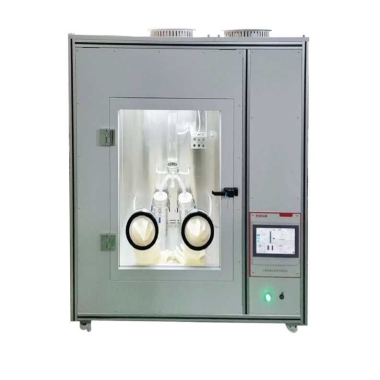
The testing system mainly consists of an aerosol generator, a test chamber, a sampling device, and a culture system. During testing, the mask sample is fixed on the testing device. A stable bacterial aerosol is generated upstream, and the sampler collects the bacteria that penetrate the mask downstream. Finally, the filtration efficiency is calculated through culture and counting.
Why Choose BFE Testing?
BFE testing offers numerous advantages over other filtration efficiency tests. It has been used for years with little or no modification and provides a standard reference for comparing filter materials. Average particle size can be tightly controlled and determined using a six-stage live particle Anderson sampler, allowing for step-by-step analysis. The BFE procedure is repeatable and presents a more demanding challenge to most filtration devices than anticipated in normal use. Large quantities of material can be evaluated in a relatively short time.
Studies show that coughing typically expels droplets between 5 and 20 micrometers in size. BFE testing measures the efficiency of a mask in filtering bacterial-containing droplets approximately 3 micrometers in size. (The average width of a human hair is approximately 70 to 100 micrometers.)
The higher the BFE, the more effective the mask is in preventing bacterial-containing droplets from reaching the wearer. For example, a mask with a BFE of 95%—meeting the requirements for medical and surgical masks (ASTM F2100-19 Class 1 barrier protection)—blocks 95% of droplets.
Key Factors Affecting BFE
(1) Material Structure: The fineness, density, and electrostatic electret treatment of meltblown fabric fibers directly affect the filtration efficiency. The finer the fibers and the more uniform the pore distribution, the better the filtration effect.
(2) Layer Design: Most medical masks use a three-layer structure (spunbond-meltblown-spunbond), with the meltblown layer undertaking the main filtration function.
(3) Fit: Even if the material's BFE meets standards, if there are gaps between the mask and the face, the actual protective effect will significantly decrease.
Frequently Asked Questions
Q: Are masks with high BFE more breathable?
A: Not necessarily. There is a certain trade-off between filtration efficiency and breathability. Some high BFE masks balance these two aspects by optimizing fiber arrangement or adding an electrostatic layer, but the choice should still be based on actual comfort.
Q: Why is Staphylococcus aureus used in the test?
A: The particle size distribution of this bacterium is similar to that of human droplets (1-10μm), and the culture and counting method is mature, stably reflecting the mask's ability to block common bacteria.
Q: What is the difference between BFE testing and Particle Filtration Efficiency (PFE)?
A: BFE is for biological particles, while PFE tests the filtration performance for non-biological particles (such as sodium chloride). The standards are different, but high BFE masks usually also have good PFE performance.
Purchase Recommendations
(1) Check the test report: Legitimate products should indicate the BFE value and testing standard (e.g., YY/T0969-2013).
(2) Observe the material: Cut open the mask to reveal the middle meltblown layer. High-quality masks are uniformly white and have good tensile strength.
BFE (Bacterial Filtration Efficiency) is a key indicator for measuring the bacterial filtration performance of masks. Its testing principle, influencing factors, and differences from other filtration efficiency tests provide a scientific basis for a comprehensive understanding of a mask's protective capabilities. When purchasing masks, paying attention to the BFE value and relevant testing standards, combined with a comprehensive consideration of the material and other practical factors, will allow us to select a more suitable mask with better protective effects, thus better protecting our own and others' health and safety in daily life and special environments.