

What is an AATCC scorch & sublimation tester?
A sublimation apparatus is a specialized device for purifying organic materials through high-temperature sublimation in a vacuum environment. It is widely used in optoelectronic materials, nanotechnology, and OLED panel manufacturing [1-4]. Its core technologies include a multi-stage vacuum system, precise temperature control (with some devices achieving an accuracy of ±1℃), and efficient condensation filtration to ensure material purity.
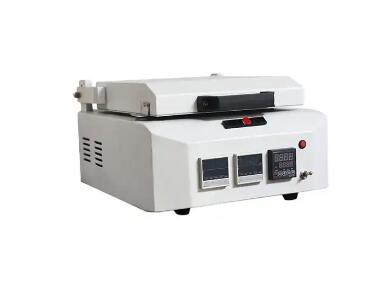
Sublimation Apparatus Principle
A sublimation apparatus is an experimental device that utilizes the sublimation phenomenon for the separation or purification of substances. So, what is sublimation? Sublimation refers to the process by which a substance directly transforms from a solid state to a gaseous state without passing through a liquid state. This process is not common at room temperature and pressure and usually requires a specific low-pressure environment.
The main components of a sublimation apparatus include a heater, a condenser, and a vacuum system. The working principle is as follows: First, the substance to be processed is placed on the heater, which slowly heats the substance, gradually increasing its temperature. When the temperature reaches the sublimation point of the substance, it begins to sublimate, directly changing from a solid state to a gaseous state.
At this point, the vacuum system plays a crucial role. The vacuum pump extracts air from the system, reducing the pressure, allowing the sublimation process to proceed at a lower temperature. The gas produced by sublimation flows through the system and eventually encounters the condenser. The function of the condenser is to cool the gaseous substance, causing it to re-condense into a solid state, thereby achieving the separation or purification of the substance.
Experimental Principle
1. Sublimation utilizes the difference in vapor pressure or volatility between solid mixtures. Impure solid compounds are heated below their melting point, taking advantage of the high vapor pressure of the product and the low vapor pressure of the impurities. The product vaporizes directly without undergoing a liquid-liquid process and solidifies upon cooling, while the impurities do not undergo this process, thus achieving the separation of the solid mixture.
2. Sublimation is a method for purifying and refining solid compounds, utilizing the difference in vapor pressure between solid organic substances.
3. Scope of application: Sublimation can only be used for solid substances with sufficient vapor pressure at relatively low temperatures, thus having certain limitations.
4. Functions of sublimation: It can remove non-volatile impurities or separate solid mixtures with different volatiles.
(Generally, nonpolar compounds with symmetrical structures have a relatively uniform electron cloud density distribution, a small dipole moment, and weak electrostatic attraction within the crystal. Therefore, such solids typically exhibit high vapor pressure. To further illustrate this, let's examine the three-phase equilibrium diagram of a substance shown in Figure 2-03. The three curves in the diagram divide the graph into three regions, each representing one phase of the substance. The vapor pressure at equilibrium between two phases can be read from the points on the curves. For example: GS represents the vapor pressure curve of the solid phase when the solid and gas phases are in equilibrium; SY represents the vapor pressure curve of the liquid phase when the liquid and gas phases are in equilibrium; SV is the equilibrium curve between the solid and liquid phases. S is the intersection of the three curves, which is also the three-phase equilibrium point of the substance, where the gas, liquid, and solid phases coexist. Different substances have different temperatures and pressures at equilibrium between their liquid and solid states.)
3. Therefore, the triple point is different for different compounds. From the diagram, we can see that below the triple point, the substance exists in a two-phase state of gas and solid. Therefore, sublimation occurs below the triple point temperature, i.e., below the melting point of the solid. The melting point of a solid can be approximated as the triple point of the substance.
Operating Procedure
Sample Loading into the Sublimation Boat: Load the solid substance to be sublimated into the sublimation boat. The sample volume should ideally not exceed half the boat's volume to prevent sample spillage.
Selecting Clean Sublimation Tubes: Select clean sublimation tubes that fit tightly together and whose length covers all three temperature zones.
Setting the Temperature: Place the end of the sublimation boat in the highest temperature zone, turn on the sublimation apparatus, depressurize using the mechanical pump, and seal the system.
Starting Sublimation: Start sublimation by setting the temperature to high, medium, and low zones, generally with a difference of 60 degrees Celsius.
During operation, the following precautions should be taken:
Before the first sublimation of an unknown sample, its relevant properties should be checked or thermogravimetric characterization should be performed to prevent excessively high temperatures from causing the sample to escape from the sublimation tube and contaminate the sublimation apparatus.
Sublimation samples should generally be pre-purified. Complex mixed samples should not be placed in the sublimation apparatus to avoid reactions at high temperatures.
Sublimation samples must be pre-dried to prevent solvent molecules, especially water molecules, from entering the molecular pump and affecting the system's vacuum level.
There are two different diameter evacuation valves at the connection between the vacuum pump and the sublimation apparatus. When using the apparatus, first open the smaller diameter valve to evacuate the sample. Once the pressure drops below 100 Pa, then open the larger diameter valve to avoid excessive evacuation speed causing the sample to be ejected from the sublimation boat and contaminate the sublimation tube.
Maintenance and Care
I. Routine Maintenance (After Each Test)
Clean Core Components: Promptly clean residual tar from the inner walls of the distillation flask and condenser. Soak in a dedicated solvent (such as kerosene or ethanol) and then rinse to prevent coking and clumping. Wipe the instrument table and outer casing to remove sample residue and dust.
Check Piping Condition: Confirm that the condensate water pipeline is unblocked and leak-free. Drain impurities from the circulating water to ensure smooth water flow. If there is a gas system, check that the pipeline connections are tight and leak-free.
System Shutdown Procedure: Operate in the order of "turn off the instrument first → turn off the water supply → turn off the power supply" to avoid damage to electrical components from sudden power outages. Keep maintenance records, noting usage and cleaning status.
II. Periodic Maintenance (Definite Cycle + Key Operation Points)
1. Weekly Maintenance
Calibrate the Temperature Sensor: Compare the temperature displayed on the instrument with a standard thermometer. If the deviation exceeds ±0.5℃, calibrate through the operating interface immediately.
Check the Heating Module: Check the heating wire surface for coking. Clean surface impurities with a soft brush to avoid affecting heating uniformity. 1. **Cleaning the Condensation System:** Drain the old water from the circulating water tank and refill with new deionized or distilled water to prevent scale buildup.
2. Monthly Maintenance:
Deep Cleaning of Components: Disassemble removable components such as the distillation head and receiving device, and clean them with an ultrasonic cleaner (using a specialized cleaning agent) to remove internal residue; replace aging gaskets and rubber tubing to ensure good sealing at the interfaces.
**Inspecting Moving Parts:** If the instrument has moving mechanisms such as automatic sample feeding and distillate receiving, add specialized lubricating oil to ensure smooth operation.
3. Quarterly Maintenance:
Comprehensive Inspection of the Electrical System: Open the instrument's side cover and clean dust from the circuit boards and power modules (use compressed air to blow away dust, avoiding water contact); check for loose wiring terminals and tighten connections.
Testing Core Functions: Verify that the instrument's automatic heating, data acquisition, and endpoint determination functions are normal; compare the test results with standard samples to ensure accuracy.
Maintaining the Circulating Water System: Clean the circulating water tank to remove scale from the inner wall; check the water pump's operating status; if the flow rate decreases or there are abnormal noises, repair it promptly. III. Key Maintenance Precautions
Environmental Requirements: The instrument must be placed in a dry, well-ventilated, dust-free environment, avoiding moisture and corrosive gases. The work surface should be stable to prevent vibration from affecting component lifespan.
Operating Procedures: Avoid overloading tests (e.g., exceeding temperature range, overloading samples) to prevent overloading of the heating module or damage to components. Do not use hard tools to scrape the instrument's inner walls or sensors.
Long-Term Inactivity Maintenance: If the instrument will not be used for more than one month, clean all components, dry them, and then store them in a sealed container. Power on the instrument for 30 minutes each month and start the condensation system for 10 minutes to prevent electrical components from getting damp and tubing from aging.
Consumable Management: Use appropriate models of consumables such as sealing gaskets and cleaning agents to avoid using inferior consumables that may damage components or cause test deviations.
As a key piece of equipment for achieving high-purity purification of organic materials, the sublimation apparatus relies on its scientific principles, standardized operation, and system maintenance to form the cornerstone of ensuring experimental success and long-term equipment operation. From precisely controlling the triple point temperature to achieve material separation, to strictly adhering to the staged heating and vacuum management procedures, and then to establishing a full-cycle maintenance system covering daily, periodic, and long-term downtime use, every step reflects a pursuit of rigor in materials science. In the future, with the continuous development of optoelectronic materials and nanotechnology, sublimation apparatuses will play an irreplaceable role in a wider range of scenarios, and continuously optimized operating procedures and maintenance standards will undoubtedly provide stronger technical support for scientific research innovation and industrial production.