

What are the types of fusing machine in garment industry?
In the modern garment manufacturing industry, the fusing process is a critical step for bonding fabrics and interlinings, enhancing structural stability, and improving overall garment quality. A fusing machine is a specialized piece of equipment that uses controlled heat, pressure, and time to firmly bond fabric with an adhesive layer (usually an interlining coated with hot-melt adhesive). By precisely regulating temperature and pressure, the machine ensures efficient adhesion between the outer fabric and the interlining. This process is especially crucial for components such as shirt collars, front panels, and waistbands, and it plays a key role in garment pressing and shaping.
There are many types of fusing machines, each with distinct characteristics suitable for different production scales, material types, and quality requirements. From a classification perspective, this article systematically reviews the main types of fusing machines used in the garment industry and provides an in-depth analysis of their working principles, application scenarios, advantages, and limitations.
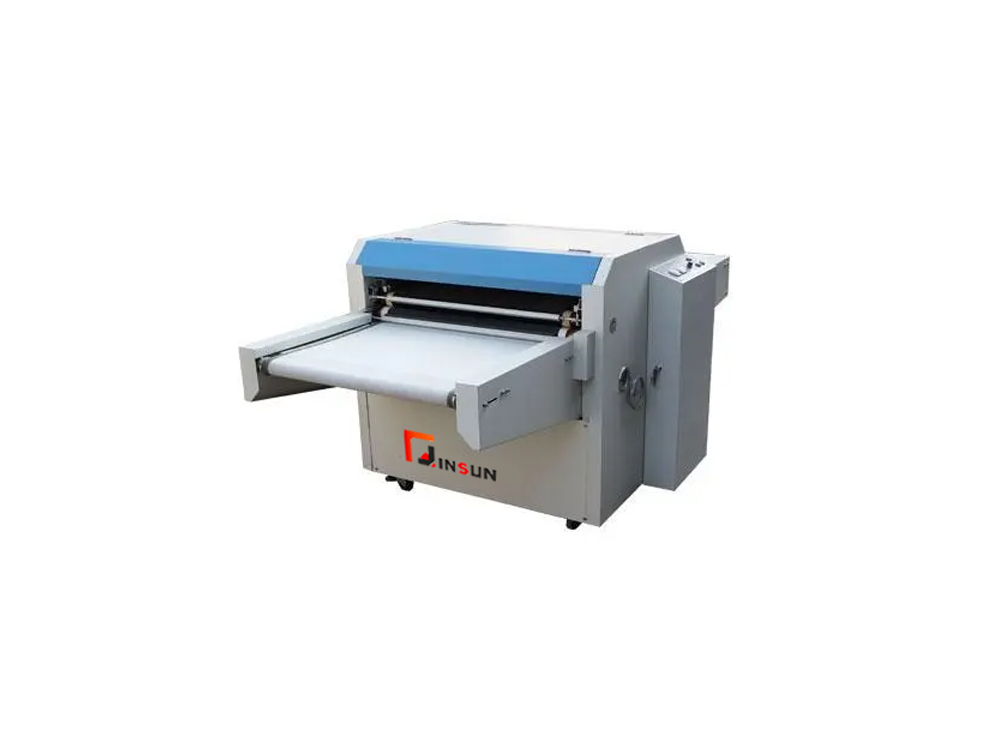
Basic Principles and Functions of Fusing Machines
The core working principle of a fusing machine is to apply controlled heat, pressure, and dwell time to an adhesive layer, causing the hot-melt adhesive to transition from a solid to a molten state and penetrate between fabric layers. Upon cooling, a strong bonding interface is formed, enhancing the garment’s structural stability and visual quality. Compared with traditional sewing methods, fusing technology offers several advantages:
High bonding strength and excellent flatness
Reduced stitching, improving garment comfort
High automation potential, significantly increasing production efficiency
Compatibility with a wide range of materials, including lightweight fabrics and high-performance fibers
As a manufacturing technique, fusing is no longer limited to conventional shirt and suit interlinings. It is now widely applied in seamless underwear, sportswear, and medical textiles, all of which are high value-added products in modern apparel manufacturing.
Classification of Fusing Machines by Working Method
Based on how heat and pressure are applied, fusing machines can be categorized into the following main types:
Flatbed Fusing Machines
Flatbed fusing machines are among the most traditional and widely used fusing devices. They use two flat heated plates—upper and lower—to apply heat and pressure directly to the fabric and interlining. Operation is relatively simple, making them suitable for small to medium production volumes or applications requiring high precision.
Characteristics and applications:
Direct contact heating via upper and lower flat plates, with precise temperature and pressure control
Suitable for complex garment parts such as shirt collars and cuffs
Relatively slow production speed with greater manual involvement
Commonly used for sample making, small-batch production, or high-end garment processing
The main advantage of flatbed fusing machines lies in their precise control over bonding position and dwell time, which is essential for garments with strict detail requirements.
Continuous Fusing Machines (Roller or Conveyor Type)
Continuous fusing machines, also known as roller or conveyor belt fusing machines, achieve high-speed, large-scale fusing by continuously feeding fabrics through heating and pressure zones. They are essential equipment for mass production.
Characteristics and applications:
Continuous feeding through conveyor belts or roller systems for high-speed operation
Ideal for large-volume production of shirts, jackets, and trousers
Real-time monitoring and adjustment of temperature and pressure parameters
Reduced dependence on operators, lowering labor costs
Standard equipment on modern garment production lines
Continuous fusing machines significantly enhance automation and productivity while maintaining stable bonding quality, making them the preferred choice for most apparel manufacturers.
High-Frequency Fusing Machines
High-frequency fusing machines use high-frequency electromagnetic energy to generate heat within the material layers, rapidly melting the adhesive layer and achieving bonding.
Characteristics and applications:
Heat generation through electromagnetic fields rather than direct thermal contact
Fast heating speed with a small heat-affected zone
Suitable for special materials such as synthetic fibers or heat-sensitive fabrics
Commonly used in high-performance sportswear, functional garments, and certain synthetic material products
This type of fusing machine requires more precise control but offers advantages in processing speed and bonding quality.
Vacuum Fusing Machines
Vacuum fusing machines introduce a vacuum environment during heating and pressing, removing air to reduce oxidation and heat loss. This results in tighter bonding and minimizes fabric deformation.
Characteristics and applications:
Fusing under vacuum conditions for more stable and uniform bonding
Particularly suitable for multilayer materials or delicate fabrics prone to deformation
Ideal for high-end or technical textiles such as waterproof fabrics and precision composites
Although vacuum fusing machines are more complex, they are highly valuable in applications with stringent quality requirements.
Multi-Layer Fusing Machines
Multi-layer fusing machines are designed to fuse multiple fabric layers simultaneously, improving overall production efficiency and are commonly used in high-capacity production lines.
Characteristics and applications:
Simultaneous processing of multiple layers to increase efficiency
Widely used for standard component fusing in high-output factories
Higher requirements for operational rhythm and coordination
Reduced variability caused by repeated manual operations
Multi-layer fusing not only enhances efficiency but also enables integrated bonding for certain complex garment structures.
Classification by Degree of Automation
In addition to technical principles, fusing machines can also be classified based on their level of automation:
Manual Fusing Machines
Manual fusing machines require operators to feed, align, and operate the equipment. They are typically used in small workshops, repair operations, or sample development.
Key features:
High operational flexibility for small-batch tasks
Strong reliance on operator skill
Suitable for customized designs or limited production runs
These machines are not intended for large-scale production but remain useful in specialized settings.
Semi-Automatic Fusing Machines
Semi-automatic machines automate heating and pressing while still requiring manual loading or unloading. They offer a balance between efficiency and flexibility, making them suitable for medium-scale production.
Fully Automatic Fusing Machines
Fully automatic fusing machines integrate automatic feeding, fusing, and stacking processes, significantly increasing efficiency and reducing labor requirements.
Characteristics and applications:
Automated feeding, bonding, and output with minimal human intervention
Stable and consistent production rhythm
Ideal for large-scale garment manufacturing and modern factories
Capable of integration with intelligent systems such as ERP or MES for refined production management
Automated fusing machines are a key component of modern Industry 4.0 garment production lines.
Application Scenarios in Garment Manufacturing
Different types of fusing machines play specific roles in the production process, including:
Shirt Collars and Cuffs
Critical components such as collars and cuffs require high-precision fusing to enhance stiffness and shape retention. Flatbed or continuous fusing machines are commonly used for these applications.
Seamless Underwear and Functional Apparel
Seamless construction and elastic materials are essential in sportswear and underwear. These applications demand precise temperature and pressure control to preserve material performance and wearer comfort, often utilizing high-frequency or vacuum fusing machines.
High-Volume Standard Component Bonding
Standard components such as waistbands and front panels are typically fused using continuous roller fusing machines in mass production to ensure high efficiency and consistent quality.
Future Trends and Development Directions
As garment manufacturing moves toward greater intelligence and customization, fusing machine technology continues to evolve in several key directions:
Automation and intelligent control: More machines feature preset temperature profiles, pressure monitoring, and automatic feeding to reduce human error and improve stability
Low-temperature fusing technology: Growing demand for processes compatible with heat-sensitive materials and environmental requirements
Energy efficiency and sustainable production: Equipment designs increasingly emphasize higher energy efficiency and lower consumption in line with green manufacturing principles
As a core piece of equipment in garment manufacturing, fusing machines are available in a wide variety of types and offer powerful functionality, making them indispensable for modern high-efficiency production. From traditional flatbed fusing machines to high-speed continuous systems and advanced high-frequency and vacuum technologies, each type has its own typical applications and technical advantages. Understanding these machine types and their suitability not only helps improve product quality but also provides a theoretical foundation for apparel manufacturers to optimize production processes and enhance automation and intelligent manufacturing capabilities.