

FAQs About Bally Type Flexometer
In industries such as footwear, leather goods, luggage, and furniture, it is often necessary to evaluate the durability of materials under repeated bending loads. The Bally Type Flexometer is an internationally recognized testing instrument used to assess the flexural performance of leather, synthetic leather, and similar flexible materials during continuous bending cycles. This article provides a comprehensive explanation of common questions regarding the Bally Flexometer, covering basic concepts, testing principles, standards, operational procedures, result evaluation, and frequently asked questions.
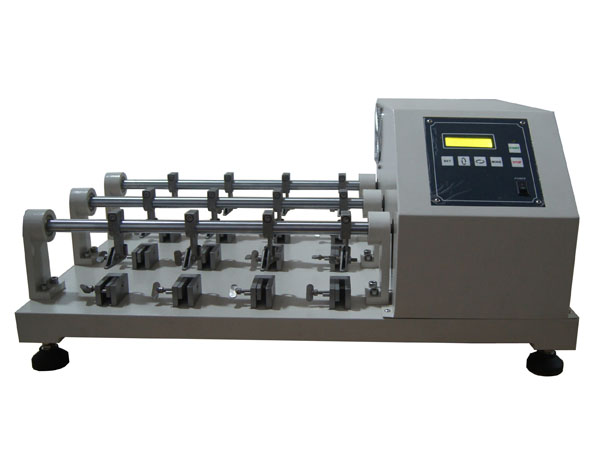
What Is the Bally Type Flexometer?
The Bally Type Flexometer is a device specifically designed to measure the durability of flexible materials under repeated bending. Its primary purpose is to simulate the damage process that occurs when materials repeatedly bend, yield, and experience fatigue in actual use. The standardized bending cycles allow evaluation of a material’s flexural fatigue resistance. The instrument is widely applicable to leather, synthetic leather, and coated surface materials with a thickness of up to 3 mm, and testing can be performed under dry or wet conditions.
How Does the Bally Flexometer Work?
The device operates by clamping one end of the sample between upper and lower clamps, then moving one clamp back and forth at a fixed angle to repeatedly bend the specimen. Typical settings include:
Sample size: standard specimen approximately 70 mm × 45 mm
Bending angle: approximately 22.5° ± 0.5°
Frequency: approximately 100 ± 5 cycles per minute
Number of cycles: pre-set according to test standards or experimental objectives
The bending motion simulates the type of flexing or deformation materials may experience during daily use. When cracks, coating delamination, powdering, or other failure phenomena appear at the specified cycle count, the material’s fatigue resistance can be evaluated.
Applications of the Bally Flexometer
The instrument is primarily used to assess:
Flexural durability of leather and synthetic leather under dry or wet conditions
The effect of coatings or surface treatments, particularly the bending limits before cracks or delamination occur
Fatigue behavior under continuous mechanical loads, such as shoe upper bending or bag folding
Test results reflect how well materials withstand repeated bending loads in practical use, supporting product quality control and development improvements.
Relevant Standards and Guidelines
Common standards for Bally Flexometer testing include:
ISO 5402-1: Leather and similar materials – Determination of flexing endurance
ASTM D6182: Leather bending and coating adhesion
SATRA TM55: Footwear material flexing endurance
JIS K6546: Japanese standard for flexing tests
BS 3144. EN ISO 20344: European standards for flexural performance evaluation
While these standards differ in scope, they all use the Bally Flexometer to perform repeated bending at specified angles and frequencies, with performance assessed by observing damage levels.
Frequently Asked Questions
1.Why test flexural durability?
Materials in actual use frequently experience repeated bending, such as shoe uppers during walking or folds in leather goods. Flexural durability is directly related to product lifespan and appearance. Testing predicts how materials perform under expected conditions and guides material selection and product design.
2.Should tests be performed under dry or wet conditions?
Testing can be performed under:
Dry conditions: to evaluate physical fatigue under normal environmental conditions
Wet conditions: to assess performance when moisture is present, as some materials exhibit different behavior, such as coating delamination or cracking under wet conditions
Wet testing simulates conditions like rain, sweat, or high humidity.
3.How is test result compliance determined?
Observation during testing focuses on:
Crack formation: whether visible cracks appear within the specified number of cycles
Coating delamination or powdering: whether surface layers peel or break
Expansion of damaged area: whether damage increases with additional cycles
Results are typically reported as the number of bending cycles until the first defect appears. Higher cycle counts generally indicate better flexural resistance.
4.Is the Bally Flexometer limited to leather?
No. While originally developed for leather, the instrument can also test other flexible materials such as synthetic leather, coated fabrics, and flexible plastics, provided the material thickness does not exceed ~3 mm and the specimen can be clamped for repeated bending.
5.Do all materials require the same cycle count?
No. Different materials have different test cycle requirements depending on intended use, performance expectations, and applicable standards. For example, some standards may specify 5.000 cycles for preliminary evaluation, while stricter assessments may require more cycles. Cycle counts are determined by standards or research needs.
6.Does testing damage the material?
The Bally Flexometer test is essentially a destructive test, observing when damage occurs during repeated bending. Multiple samples are typically prepared, and the goal is to evaluate damage modes and durability.
Operational and Maintenance Considerations
Correct specimen installation:
Samples must be folded and clamped according to standard requirements, ensuring even stress distribution and perpendicular alignment for consistent, comparable results.
Common equipment issues:
Counter display errors: may be caused by malfunctioning counters or electrical issues
Unstable bending frequency: possibly due to motor, transmission, or mechanical wear
Loose or ineffective clamps: requires inspection of clamping mechanisms
Refer to the maintenance manual or technical support for resolution.
Ensuring accurate test results:
Accuracy depends on:
Strict adherence to standards for angle, frequency, and environment
Proper specimen preparation, including size, orientation, and pre-treatment
Consistent observation and data recording
Industry Trends and Applications
With ongoing development in material science, the Bally Flexometer remains valuable in material research, quality control, and new material screening. Modern instruments often feature digital displays, automatic stop functions, memory for cycles, and temperature/humidity control, enhancing automation and test stability.
Additionally, the Bally Flexometer is often used alongside other tests, such as tear resistance and abrasion testing, to provide a comprehensive evaluation of material performance.
The Bally Type Flexometer is a key instrument for assessing the bending durability of leather and similar flexible materials. By controlling the number of bending cycles, angle, and frequency, it simulates material fatigue in practical use and evaluates resistance to damage. This article provides a full guide to its definition, standards, operation, common issues, maintenance, and result evaluation, supporting proper understanding and application of this testing equipment.