

FAQs About AATCC Viewing Board
In textile testing, the AATCC Viewing Board is a widely used and essential visual assessment tool. It provides a standardized visual evaluation environment to assess fabric appearance, smoothness, wrinkle recovery, and other characteristics. This tool plays an irreplaceable role in evaluating colorfastness, fabric appearance, and laundering performance.
This article provides a comprehensive overview of the AATCC Viewing Board, including its purpose, working principle, relevant standards, operating procedures, precautions, common evaluation misconceptions, maintenance, and its role in modern textile quality control.
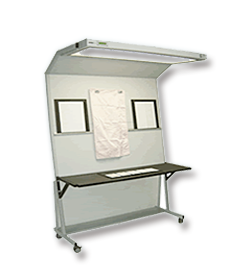
1. What Is an AATCC Viewing Board?
The AATCC Viewing Board is a standardized lighting and visual observation device designed for textile evaluation in accordance with multiple AATCC (American Association of Textile Chemists and Colorists) standards. By providing a uniform light source, fixed observation area, and standard comparison method, it ensures consistency and comparability of evaluations across different samples.
It is commonly used to evaluate fabric smoothness, wrinkle recovery, surface characteristics, and other visual quality indicators. The board provides standard illumination and allows testers to compare samples against reference standards, a process known as visual assessment.
2. What Is the Viewing Board Used For?
Visual Comparison Evaluation
The primary function of the AATCC Viewing Board is to provide a standardized visual evaluation environment, enabling testers to observe and assess samples under consistent lighting. Typical evaluation criteria include:
Fabric smoothness and flatness: Compare the sample surface with a reference standard to determine changes in flatness after daily use or laundering.
Wrinkle recovery: Assess the fabric’s ability to maintain creases after repeated laundering or mechanical stress, evaluating stiffness and wrinkle resistance.
Appearance consistency: Compare test samples to reference standards in terms of color, luster, and texture.
Evaluation involves observing the reference and test samples simultaneously under the viewing board’s illumination and assigning ratings according to AATCC visual grading rules.
3. Light Source and Standard Requirements
A key component of the AATCC Viewing Board is the lighting system. To ensure consistent evaluation conditions, the board typically uses Cool White Fluorescent (CWF) lamps as the standard light source. This provides uniform, stable illumination that meets the requirements of multiple AATCC standards.
Common lamp specifications include:
1200 mm CWF tube: Suitable for smaller viewing boards
2400 mm CWF tube: Suitable for larger or wider observation areas
Lamps are installed above or inside the board, ensuring even illumination across the observation area and preventing interference from external ambient light.
4. Relevant AATCC Standards Using the Viewing Board
The AATCC Viewing Board is used with multiple visual evaluation standards, including:
AATCC 88B / 88C: Smoothness and seam appearance assessment
AATCC 124 / 128: Fabric appearance after laundering
AATCC 143 / 178: Appearance evaluation of garments and textiles after multiple washes
These standards involve visual grading steps, requiring comparison between test samples and reference standards under consistent lighting conditions.
5. Operating Procedures
Standardized Setup and Preparation
Before testing, place the viewing board in a stable, glare-free environment. Boards can be wall-mounted or mounted on adjustable stands. Lamps should be preheated to stabilize light output.
Sample and Reference Placement
Position the test sample and corresponding reference standard (e.g., grey card or wrinkle reference piece) side by side in the center of the board. Ensure both are illuminated evenly and observed from the standard viewing angle.
Evaluation and Recording
The evaluator stands in front of the board, with the line of sight parallel to the samples, and visually compares the sample with the reference. Ratings are assigned according to the relevant standard and recorded. Care should be taken to avoid eye fatigue and glare interference.
6. Common Questions and Answers
Q: Why must lighting conditions be standardized?
Lighting significantly affects visual evaluation. Differences in color temperature, illuminance, or flicker can make the same sample appear different under various conditions. Standardized lighting reduces environmental influence on results.
Q: Must the viewing board be used with reference standards?
Yes. Reference samples (grey cards, wrinkle standards, etc.) are essential for accurate grading. Sample appearance is compared against these references to determine ratings.
Q: Can the viewing board replace a professional lightbox?
No. The viewing board provides standardized observation and illumination for visual assessment. For precise colorfastness or color measurement, professional lightboxes or spectrophotometers may still be required.
Q: How can human error be minimized?
Human factors such as viewing angle or vision differences affect results. Mitigation methods include:
Specifying standard observation positions and angles
Training evaluators on grading criteria
Using multiple evaluators and averaging results
7. Relationship with Colorfastness Testing
The AATCC Viewing Board is closely associated with visual colorfastness tests, including crocking, washing, and lightfastness evaluations. After samples undergo these tests, visual comparison with reference standards is used to assess color change. Grey cards, comparison boards, and standard light sources are integral, and the viewing board ensures consistent evaluation conditions.
Sample grades, usually expressed numerically or by rating scale, provide pass/fail criteria and guide formulation adjustments or dyeing process optimization.
8. Ensuring Long-Term Stable Use
To maintain consistent evaluation conditions:
Light source maintenance: Standard lamps age over time, causing brightness and color temperature changes. Regularly inspect and replace lamps as needed.
Cleaning and protection: Keep the board surface and lamp covers clean. Avoid dust, smudges, or reflections that may interfere with even illumination.
Calibration and verification: Periodically verify lighting conditions, illuminance, and spectral consistency using a lux meter or spectroradiometer if necessary.
9. Significance in Modern Textile Quality Control
In textile production, from dyeing and weaving to finishing and final products, every step affects fabric appearance. The AATCC Viewing Board provides a globally recognized visual evaluation standard, ensuring comparable results across production stages and regions.
Textile laboratories, QC teams, and R&D engineers use the board to verify appearance quality, such as fabric stability after repeated washing or garment wrinkle resistance, under standardized conditions.
10. Industry Trends and Development
AATCC continues to update technical manuals and testing procedures, highlighting the importance of visual assessment environments. Future viewing boards may integrate with spectrophotometers or automated visual evaluation systems to improve objectivity and efficiency. However, the fundamental role of the viewing board as a standardized visual assessment tool will remain essential.
In conclusion, the AATCC Viewing Board is an indispensable tool for evaluating textile appearance. By providing a standard light source, fixed observation area, and unified process, it ensures objective, consistent, and globally comparable results. Whether assessing fabric smoothness, wrinkle recovery, or colorfastness, the viewing board remains a core instrument in textile quality control. Understanding its working principles, proper operation, common questions, and maintenance is critical for improving quality assurance in the textile industry.