

Zipper Testing Machine of Reciprocating Pull,DIN 3419-1
In industries such as apparel, footwear, bags, and outdoor equipment, zippers are key fasteners, and their performance directly affects product usability and overall quality. Poor-quality zippers can lead to sticking, misalignment, breakage, and in extreme conditions, even safety risks. Therefore, scientifically, objectively, and repeatedly testing zipper quality is essential. The Reciprocating Pull Zipper Testing Machine is a professional device commonly used for this purpose. It simulates repeated opening and closing of zippers under real-use conditions, evaluating durability and reliability over prolonged cycles. This article provides a detailed introduction covering equipment definition, working principle, testing procedures, standards, data analysis, and applications.
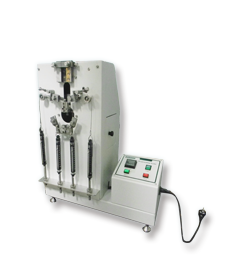
What is a Reciprocating Pull Zipper Testing Machine
The Reciprocating Pull Zipper Testing Machine, also known as a zipper fatigue tester, zipper cyclic pull tester, or zipper repeated pull tester, is a laboratory device that mechanically drives the zipper slider in a preset reciprocating motion. This simulates repeated opening and closing during daily use, evaluating the zipper’s durability and fatigue performance under lateral and longitudinal tension. Unlike standard strength tests, this testing focuses on fatigue resistance, wear resistance, and operational longevity, reflecting real-world usage more accurately.
The machine is designed to mimic actual use: the slider is pulled back and forth at a set speed, replicating daily actions like dressing, bag use, or shoe closure. Parameters such as cycle count, tension, and pull angles can be adjusted to evaluate different zipper specifications and materials.
Working Principle of the Reciprocating Pull Tester
1. Basic motion simulation
The core principle is a mechanically driven system that moves the zipper slider along a fixed reciprocating path at a constant speed. Typically, the machine performs 30 cycles per minute, simulating repeated human use.
The zipper is clamped at both ends using specialized fixtures. The drive mechanism moves the slider through the preset travel range, completing one full open-close cycle per reciprocation. Testing continues until the preset number of cycles is reached or the zipper fails.
2. Application of lateral and longitudinal tension
During testing, both lateral (sideways) and longitudinal (lengthwise) tension are applied. Lateral tension simulates the force when a zipper is pulled apart, while longitudinal tension mimics the stress on the zipper when the two ends are stretched. These forces replicate real-use stress conditions and more accurately reflect fatigue behavior and durability limits.
Fixture width, slider travel distance, and pull angles are designed according to industry standards—for example, lateral fixture width is often 25 mm, slider travel is 75 mm, open angle is approximately 30°, and closed angle is about 60°.
Components and Technical Features
1. Main components
A complete Reciprocating Pull Testing Machine typically consists of:
Frame and drive system: Provides structural support and reciprocating motion.
Slider gripping mechanism: Holds and moves the zipper slider.
Tension loading device: Applies preset lateral and longitudinal forces.
Counter: Records the number of cycles and allows automatic stop at a preset count.
Control system: Sets speed, cycle count, stop conditions, and monitors the test.
Display and recording device: Shows test cycles and status for analysis.
2. Key technical features
Adjustable cycle count: Can range from hundreds to hundreds of thousands of cycles, up to 999.999; the counter records actual cycles and stops automatically.
Constant reciprocating control: Maintains uniform speed and travel for consistent and comparable results.
Tension adjustment and monitoring: Ensures test forces comply with standards (e.g., 5–10 N).
Automatic stop: Stops the test if the zipper fails or preset conditions are met.
Compatibility with multiple zipper types: Metal, nylon, and plastic zippers can be tested by adjusting fixtures.
Relevant Standards and Regulations
To ensure standardized and comparable results, Reciprocating Pull tests are aligned with multiple industry standards:
QB/T2171. QB/T2172. QB/T2173: Chinese standards for metal, plastic, and nylon zippers.
BS 3084: UK standard for slider fastener performance.
CNS 1083: Taiwan standard including cyclic zipper testing.
AS 2332: Australian standard covering slider fastener durability.
NF G91-005: French standard on zipper performance.
JIS S3015: Japanese industrial standard for slider fasteners.
DIN 3419-1: German standard for slider testing.
SATRA TM50: International footwear testing standard including zipper fatigue testing.
Compliance with these standards facilitates international trade, quality certification, and supply chain quality management.
Detailed Testing Procedure
1. Preparation
Prepare zipper samples according to standard requirements, typically finished zippers longer than a specified length (e.g., 250 mm) and free from visible defects. Verify equipment operation, including power stability, clean fixtures, and zeroed counters.
2. Sample installation and fixture setup
Clamp one end of the zipper in the upper fixture, the other in the lower fixture. Ensure the slider is in the correct starting position and the zipper is centered. Adjust lateral fixture width and longitudinal tension according to the zipper type and standard.
3. Parameter setting
Set cycle count, slider travel, speed, and tension. Typical settings are 30 cycles per minute and 75 mm travel distance to simulate realistic usage.
4. Test execution
Start the machine, which moves the slider reciprocally according to the set parameters, recording each cycle. Monitor for abnormal noise, jamming, or other issues.
5. Observation and recording
Stop the test when the preset cycles are reached or the slider fails. Record cycles completed, damage observed, and other anomalies. Inspect the zipper for wear, tooth detachment, or slider breakage to evaluate fatigue performance.
6. Data analysis
Compile the results into a report, comparing with standard requirements and historical data, providing guidance for design, material selection, and production improvements.
Data Significance and Quality Evaluation
1. Cycle count
The number of completed cycles is a key indicator of fatigue resistance. Meeting or exceeding standard cycle counts indicates high durability.
2. Damage assessment
Inspection for jamming, misaligned teeth, or broken sliders reflects material quality and manufacturing processes.
3. Failure mode analysis
Identifying failure types helps determine whether issues arise from material, manufacturing, or design flaws.
4. Standard comparison
Comparing data against minimum requirements allows a quick judgment of product compliance.
Industry Applications
Apparel and bags: Pre-screen zipper suppliers to ensure product reliability.
Footwear: Evaluate zippers in boots and functional shoes.
Outdoor and sports gear: Test zippers for tents, backpacks, and jackets to ensure performance under repeated use.
Children’s products and safety equipment: Ensure long-term stability for secure and safe use.
Improving Test Results and Product Quality
Optimize materials: High-strength, wear-resistant teeth, sliders, and tapes increase durability.
Improve manufacturing: Refine tooth forming and heat treatment for higher fatigue resistance.
Strict quality control: Include incoming material inspection, in-line testing, and final product checks.
Regular equipment calibration: Maintains accuracy and comparability of results.
Future Development Trends
Digital testing systems: High-precision sensors and software track dynamic changes during testing.
Intelligent analysis platforms: Big data can predict zipper lifespan and failure probabilities to guide design optimization.
Virtual simulation: Computer modeling predicts how design parameters affect performance, accelerating early-stage R&D screening.
These trends will make Reciprocating Pull testing more efficient, intelligent, and data-driven, improving overall zipper quality.
The Reciprocating Pull Zipper Testing Machine is an essential tool for evaluating zipper fatigue performance. By simulating repeated opening and closing under set tension, it tests slider and tooth behavior through fatigue cycles. Following standards such as QB/T2171. BS 3084. and CNS 1083. the device supports both product inspection and R&D optimization. In global apparel, footwear, bag, and functional gear industries, it ensures reliability, extends product lifespan, and reduces after-sales issues. Advances in testing technology and intelligent analysis will make its application increasingly precise and effective, raising overall product quality.