
Tel:+86-21-6780 0179
Fax:+44(0) 207 398 0999
Email:market@qinsun-lab.com
Universal Friction Wear Tester
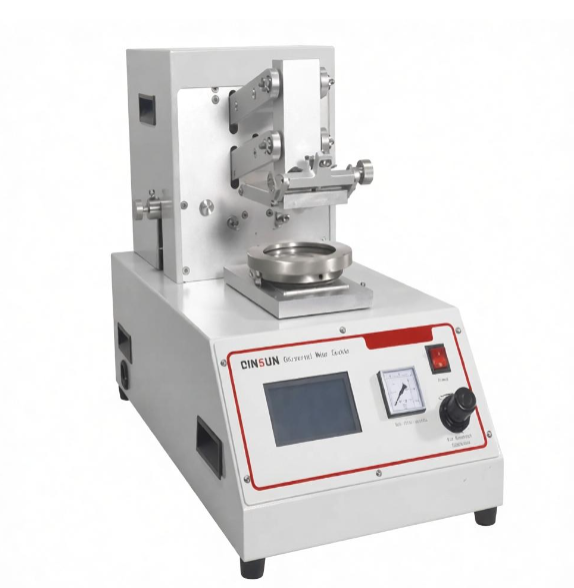
The universal wear and abrasion resistance tester is used to test wear and abrasion resistance of fabrics for apparel, shoes, upholstery, automotive, and many other areas. The instrument, also known as a Stoll Quartermaster Abrasion Tester is designed to run numberous tests with five different possible setups.
Applications
Universal wear resistance testing equipment is to determine the wear and abrasion resistance of fabric used in clothing, footwear and industrials. Universal wear tester supplies with surface abrasion head (inflated diaphragm method) and Flex abrasion head as well as necessary weights and blades. Accessories are available on request for conducting frosting, pilling and edge abrasion tests.
Universal wear tester (stoll universal wear tester) fitted with the built-in timer and mechanical cycle counter; repeatable and reproducible testing is ensured by consistent motor speed providing 120 double strokes per minute of 25mm (1in) stroke length. The improved air injection system for more uniform inflation of the diaphragm used in surface abrasion testing, and a superior clamping mechanism for repeatable specimen tensioning.
Testing Standards
ASTM D3514/D3885/D3886. AATCC 119/120. FTMS 191/5300/5302. FORD EFB 15J2/BN 112-01
Product Information
The instrument can conduct flat grinding, curved grinding, edge grinding, fold grinding and abrasion test such as frosting resistance, welt, gigging, which is used for the woven fabric, knitted fabric and coated fabric, pile fabric, socks, felt, non-woven, deep fabric, yarn, cord, plastic film, rubber, leather, paper, and many other materials. By the test sample can be dry, also could be immersed in water, oil, or in other liquid.
Parameters
| Item | Specification |
|---|---|
| Rotation Speed | 120 rpm |
| Measuring Range | 25 mm |
| Width | 570 mm |
| Length | 680 mm |
| Height | 400 mm |
| Power Supply | 220/110 V, 50/60 Hz |
| Weight | 80 kg |
FAQ
1. What is a Universal Friction Wear Tester used for?
It is used to evaluate the friction, wear resistance, and durability of materials and coatings.
2. What materials can be tested?
It can test metals, plastics, rubber, coatings, composites, and other friction materials.
3. What parameters can be measured?
Typical measurements include friction coefficient, wear amount, wear rate, and friction force.
4. Can different friction conditions be simulated?
Yes. Different loads, speeds, and friction modes can be configured according to the test requirements.
5. What industries use this tester?
It is widely used in automotive, machinery, materials, coatings, rubber, plastics, and research laboratories.