
Tel:+86-21-6780 0179
Fax:+44(0) 207 398 0999
Email:market@qinsun-lab.com
Dry fallen wadding tester for Surgical textiles and nonwovens
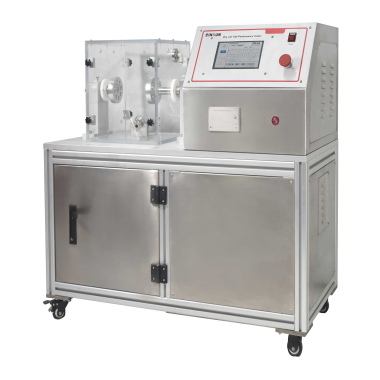
The tester is used to evaluate the fallen wadding test of non-woven fabrics under dry conditions, and is mainly applicable to the evaluation of the shedding performance of raw material non-woven fabrics and other textile materials used for medical protection (surgical orders, surgical gowns, clean clothes, etc.).
1. Test philosophy: The sample is subjected to the combined action of torsion and compression in the test chamber. Air is drawn from the test chamber during this twisting process, and the test result is evaluated by counting and classifying the particles in the air with a laser dust particle counter.
2. This instrument has high-resolution large-size color touch screen and it is easy to operate and convenient to use. At the same time, it can simultaneously monitor the number of particles in 8 particle size channels and their changes, and store up to 10×500 groups of data. It is typically used in particulate matter testing, air particle research, indoor air quality assessment in clean houses, as well as in filter performance testing and cleanliness evaluation
Standards compliant
YY/T 5056.6 Surgical sheets, surgical gowns and cleansing suits for patients, medical staff and equipment - Part 4: Dry fallen wadding test method;
ISO 9073.10 Test method for textiles and nonwovens - Part 10: lint and other granules produced in a dry state;
EN 13795-2-2004 Surgical covers, long coats and non-contaminated suits for patients, medical staff and medical equipment, part 2: test methods
Technical Parameters
Control mode: smart touch;
Test speed: 60 times / minute;
Rotation angle: 180 degrees / per time;
(clockwise, counterclockwise alternate);
Diameter of disk:Φ82.8㎜;
Starting distance: (between two discs);
Stroke of moving plate: straight line);
Maximum sample concentration allowed: 35.000 / L;
Particle size channel: :0.3、0.5、0.7、1.0、2.0、5.0、7.0、10.0 µm (eight);
Air sampling flflow: 28.3L/min;
Minimum measurable particle size: 0.3μm;
Interval time: 1s ~ 10s 10 options available;
Weight:55kg;
Power supply:220V 50Hz;
Dimension:85cm×60cm×90cm;
Sampling time (ie sampling amount): 20 kinds from 0.5min to 10min.Optional sampling time(ie: 14.15L,28.3L 283L a total of 20 sampling quantities are available);
Test Procedures
The operation method of the atomization tester includes the following steps:
Sample Preparation: Pre-treat the sample according to the testing standards, such as cleaning, drying, and aging under specific conditions.
Instrument Settings: Adjust the instrument's temperature, humidity, airflow speed, and other parameters according to the characteristics of the sample and testing requirements.
Test Execution: Place the sample in the test chamber, start the instrument, and record the test time and the amount of mist in the mist collection device.
Data Analysis: Calculate the atomization rate, mist distribution uniformity, and other indicators based on the test data to evaluate the sample's atomization performance.
When operating the atomization tester, users should pay attention to the following:
Ensure the sample is clean and dry before testing.
Adjust the instrument's temperature, humidity, airflow speed, and other parameters to simulate the temperature and humidity conditions in actual application scenarios.
Record the test time and the amount of mist in the mist collection device.
Calculate the atomization rate, mist distribution uniformity, and other indicators based on the test data to evaluate the sample's atomization performance.
FAQ
1. What is this product?
The dry fallen wadding tester evaluates the tendency of textiles, nonwoven fabrics, carpets, and fiber-based materials to release fibers or lint under mechanical agitation in dry conditions. It provides quantitative data on fiber shedding, which is critical for product durability and quality control.
2. What is it used for?
It is used to assess shedding performance of clothing, home textiles, industrial fabrics, and nonwovens. It helps manufacturers control product quality, optimize fiber blends, evaluate surface treatments, and ensure compliance with industry standards.
3. How does it work?
Samples are subjected to standardized mechanical agitation or tumbling in the tester. Released fibers are collected on filter pads or trays, and the mass or quantity of fallen fibers is measured. Test parameters, such as duration, agitation speed, and sample size, are adjustable to simulate real-life wear conditions.