
Tel:+86-21-6780 0179
Fax:+44(0) 207 398 0999
Email:market@qinsun-lab.com
Dry Wet rubbing fastness Tester
Brief Introduction
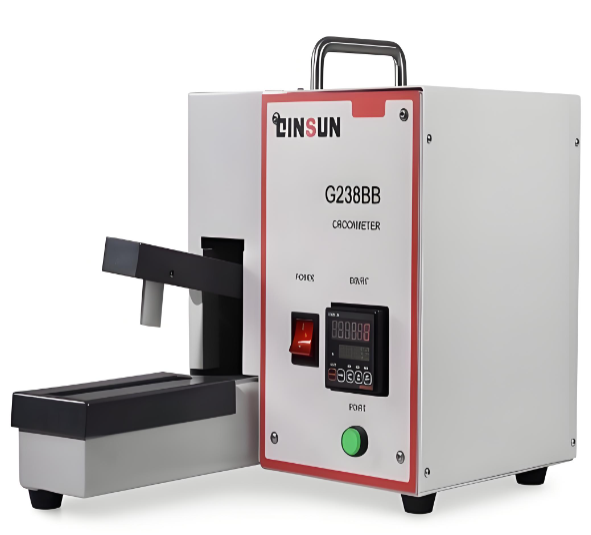
AATCC Manual Crockmeter is designed with a base, rubbing rotation mechanism and a counter. Fix the specimen and sand paper with the specimen clamp on one side of the base.Rotate the knob to rub the friction head with the white cotton cloth against the specimen in reciprocation motion with specified strokes. After ten times of friction between the white cloth and the specimen, assess the color transfer to the white cloth with a gray scale and the stability of dyed fabric specimen or surface coating so as to provide reference data for material assessing and selection.
Product Features
Electronic Crockmeter is used to determine colour fastness of materials to wet and dry rubbing, motorised for frequent use and long run tests.
A.Diameter of friction head:16mm or 25mm;
B.The weight to produce a loading of 9N;
C.Electric drive, working voltage of 220V;
D.Equipped with electronic counter, could completely simulate the results of manual friction for 10 times, with high reproducibility;
E.The fixed device for the standard crocking cloth;
F.A steel spring clip for rapidly fastening samples;
G.Control mode consists of AATCC, ISO standards, and customized setting;
H.Automatic alarm to remind the test over.
Applications
Electronic Crockmeter/Rubbing Fastness Tester is used to determine the colour fastness of cotton, chemical fiber, blended, other coloured fabrics and leather to dry or wet rubbing, suitable for frequent use and long run tests. A piece of dyed test cloth and a piece of white cotton cloth are rubbed against each other though the tester in a specific pressure and stroke.
The color fastness of the sample is graded by comparing the coloring of the white cotton with the gray scale. Fitted with digital electronic preset-table counter for strokes.
Testing Standards
ASTM F1319. AATCC 8/165. BS 1006 D02. GB/T 3920. ISO 105 D02/X12. JIS L0849. M&S C8/C8A, NEXT T
FAQ
1. What does it test?
Tests textile color fastness to rubbing.
2. Which standards apply?
ISO 105-X12. AATCC 8. and GB/T 3920.
3. What samples can be tested?
Fabrics, garments, and dyed textiles.
4. What does it evaluate?
Color transfer under dry and wet rubbing.
5. Where is it used?
Textile labs and quality-control departments.