
Tel:+86-21-6780 0179
Fax:+44(0) 207 398 0999
Email:market@qinsun-lab.com
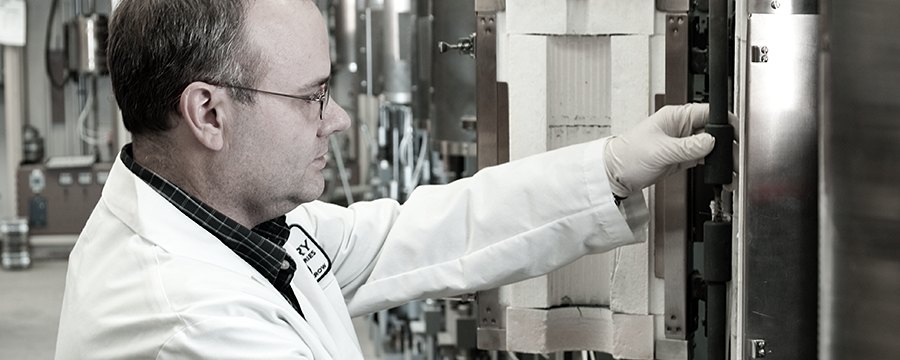
ASTM E1354 Cone Calorimeter
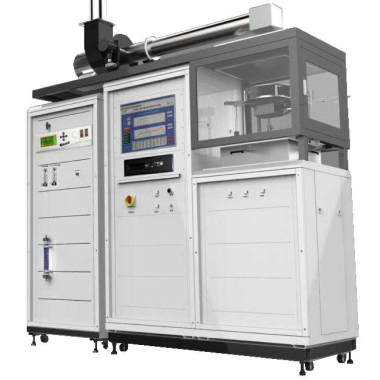
The Cone Calorimeter is a precision fire-testing instrument designed to evaluate material combustion behaviors based on oxygen-consumption calorimetry. It measures critical fire-reaction parameters such as heat release rate (HRR), mass loss, ignition time, smoke production, CO/CO₂ generation, and gas flow.
Using a modular design, the system allows users to begin with essential components—such as heat-release measurement or smoke analysis—and expand later into a full-feature fire-testing platform. This flexibility makes it ideal for research, certification, and quality-control laboratories across industries including construction, rail transit, marine, aerospace, automotive, and polymer materials.
Test Principle
A sample is placed in a "cone" shaped radiant heater. Normally, the sample is exposed to 35 kW / m2 of external flux-forming heaters. However, for more refractories the heater is often increased to 50 kW / m2. Once sufficient pyrolysis products are produced, ignition occurs. Combustion products pass through a conical heater and through an instrument discharge tube.
The measured / calculated values are usually important including, but not limited to, the maximum ignition time, the mass loss rate during combustion, the maximum amount of time and heat released during combustion, the total amount released during the test.
Complete system includes
1. Conical heater - in a truncated cone, 230V, 5000W, with a heat output of 100 kW / m2
2. Test the sample device in horizontal or vertical.
3. 3 K-type thermocouple and 3 PID temperature controllers for temperature regulation
4. Opening and closing mechanism - to protect the sample area before testing to ensure that the initial quality measurement is stable, the operator can have additional time to test the system before testing. For flammable samples, if there is no opening and closing mechanism, it is easy to burn prematurely. This extra time is very important to the operator
5. Sample holder - sample size 100mm x 100mm, thickness of not more than 50mm, placed horizontally or vertically
A cone calorimeter is a fire test apparatus based on the amount of heat released during the combustion process, which is directly related to the oxygen consumption in the combustion process.
The amount of heat generated is directly proportional to the severity of the fire, such as the rate of fire growth. In order to obtain the flammability of the material, the material is exposed to an external radiation heat source. Therefore, since this is a forced combustion test, the cone value is generally considered to reflect the second ignitability of the ignition.
Cone Calorimeter Analysis Instrument Standards
ISO5660.ASTM E 1354. ASTM E 1474. ASTM E 1740. ASTM F 1550. ASTM D 6113. NFPA 264. CAN ULC 135. BS 476
Scope of application
The Cone Calorimeter is the most significant bench scale instrument in the field of fire testing.
Technical Parameters
| Item | Value |
|---|---|
| Power supply | 208–230 V, 50/60 Hz, 50 A, single phase |
| Cone heater | 5000 W Inconel heater, 0–120 kW/m² |
| Sample size | 100 mm × 100 mm × ≤50 mm |
| Ignition | 10 kV automatic spark igniter |
| Temperature control | PID, 3× K-type thermocouples |
| Exhaust system | Stainless-steel hood, duct, orifice meter, axial fan |
| Gas sampling | 12-pore ring sampler, 0.5 µm triple filtration, 0–5 °C cold trap |
| Gas analyzers | O₂ paramagnetic (0–25%); CO₂ NDIR (0–10%); CO NDIR (0–1%) |
| Smoke measurement | He-Ne laser photometric system |
| Load measurement | Sartorius load cell, 0.01 g resolution |
| Data acquisition | 16-bit A/D, 4 scans/sec |
| Control system | LabVIEW + PLC, touchscreen control |
| Data output | Excel reports, customizable formats |
| System configuration | 19" rack modules; customizable full-system layout |
FAQ
(1) What is this product?
The Cone Calorimeter is an instrument used to evaluate fire performance of materials by measuring heat release, mass loss, and smoke production during combustion.
(2) What is this product used for?
You can use it to assess building materials, furniture, textiles, plastics, and fire-retardant materials for fire behavior, heat release rate, and smoke generation.
(3) How does this product work?
It ignites samples in a controlled environment and measures heat release, mass loss, smoke, and gas concentrations using thermocouples, load cells, gas analyzers, and data acquisition systems.
(4) Why is this product important?
It provides precise, standardized, and repeatable fire performance data, supporting safety assessment, regulatory compliance, and material development.
(5) Which industries is this product suitable for?
This instrument is suitable for building materials, furniture, textile, plastics, fire-retardant material development, research laboratories, and certification agencies.