
Tel:+86-21-6780 0179
Fax:+44(0) 207 398 0999
Email:market@qinsun-lab.com
AATCC Wrinkle Recovery Tester
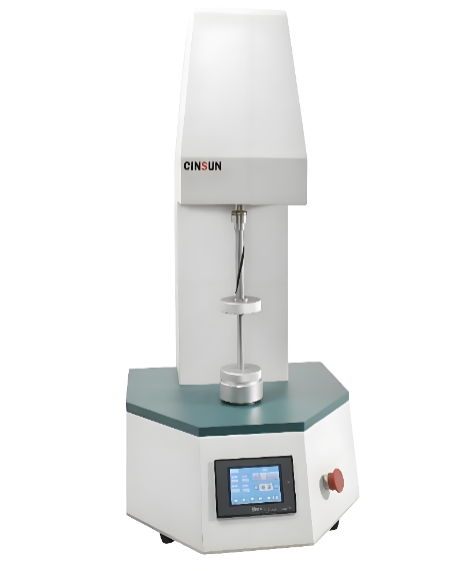
The main principle of the wrinkle recovery tester is to apply a predetermined pressure to the specimen under standard atmospheric conditions and to maintain the specified time.The overall structure of the instrument and the precise spiral column ensure that the loaded specimens produce a uniform deformation. After removing the sample from the instrument, re-adjust the sample under standard atmospheric conditions and allow it to recover for a certain period of time, and then compare the sample with the reference sample to assess the appearance of the sample.
AATCC fabric Wrinkle Recovery Tester Application
The wrinkle recovery test instrument detects the recovery of the specimen after a certain period of time under a load. It is suitable for any fiber pure or blended fabric test. Besides, it can not maintain the shape of stable materials under the characteristics of the conditions, such as the material which is soft, thin and easy to bend. We can evaluate its anti-crease performance through this device.
Technical Parameters
Items | Parameters |
Sample size | 15cm×28cm(6×11inch) |
Weights | 2000g,1000g,500kg,200kg Accumulate |
Dimensions | 150×150×330mm(L×W×H) |
Weight | 9.5kg(21lb) |
Features
Designed for evaluating fabric wrinkle recovery performance.
Complies with AATCC 128 test requirements.
Simple and convenient operation.
Provides consistent and repeatable test results.
Suitable for various woven and knitted fabrics.
FAQs
1. What is an AATCC Wrinkle Recovery Tester used for?
It is used to evaluate the wrinkle recovery properties of textile fabrics.
2. Which standard does it comply with?
It is commonly used according to AATCC 128.
3. What fabrics can be tested?
It can be used for various woven and knitted fabrics.
4. Is the tester easy to operate?
Yes, it features simple operation and convenient testing.
5. Why is wrinkle recovery testing important?
It helps evaluate a fabric’s ability to recover from wrinkles after deformation.