
Tel:+86-21-6780 0179
Fax:+44(0) 207 398 0999
Email:market@qinsun-lab.com
Anatomy Cloth Burling Machine
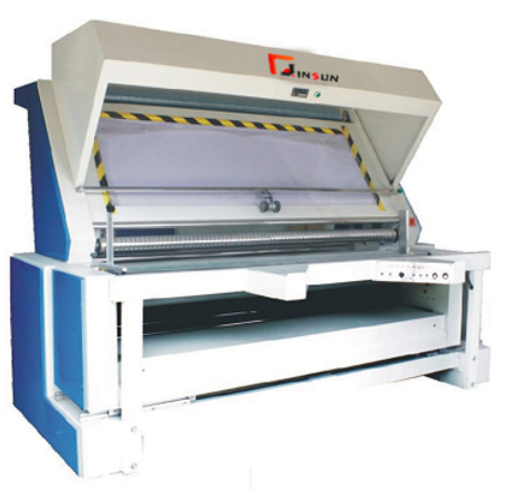
The Anatomy Cloth Burling Machine is a textile finishing machine designed to inspect and remove slubs, loose yarns, knots, and other surface defects from fabrics. It helps improve fabric appearance and overall finishing quality.
Application
lt is suitable for planing and winding of circular wovenfabric and cylindrical fabric.
Basic characteristics
| Item | Specification |
|---|---|
| Fabric Inspecting Width | 2000 mm |
| Maximum Batching Diameter | 500 mm |
| Power Supply | AC 220 V ± 50 Hz |
| Rolling Speed | 0–50 m/min |
| Automatic Edging Error | 5–8 mm |
| Power | 2.0 kW |
| Gross Weight | 650 kg |
| Machine Dimensions (L × W × H) | 2700 × 2400 × 2000 mm |
Features and function
1、Automatic rolling-up (roll up by friction)
2、Automatic infrared edging, edging error 5-8mm (error isdetermined by the situation of selvage)
3、Equip with running coder
4、Automatic rolling-up (roll up by friction)
5、No-fabric pause function:Control by electronic eye,automatically stop running after loosening the cloth. Endcloth shall not slide down suddenly, remained cloth canconnect with second roll of cloth,in this way,it can savetime of placing the cloth again.
6、Equip with cloth placement basket made of stainless steel.
7、Upper and lower inspection light boxes.Inspection panelof the lower light box with high-quality acrylic panels andground glass complex,which can not only relieve eyefatigue of the operator, and but also greatly reduce staticelectricity. Lamp source configuration adopts LED,lampsource brightness is strong and even, and mainly noshadow.
8、lnstall roller scutching axle so as to get better rolling effecton fabric.
9、Double-frequency speed control function is to keepbalanced working speed of releasing and rolling cloth soas to achieve better rolling-up effect.
FAQs
1. What is an Anatomy Cloth Burling Machine used for?
It is used to remove yarn defects, slubs, knots, and loose fibers from fabric surfaces.
2. What types of fabrics can it process?
It can be used for various woven and knitted fabrics, depending on the machine configuration.
3. What are the main advantages?
It improves fabric appearance, finishing quality, and processing efficiency.
4. Is it suitable for quality control?
Yes, it can be used for fabric inspection and defect removal during textile finishing.
5. Where is it commonly used?
It is mainly used in textile mills, fabric finishing plants, garment factories, and quality control departments.