
Tel:+86-21-6780 0179
Fax:+44(0) 207 398 0999
Email:market@qinsun-lab.com
Fabric Formaldehyde Content Tester
ASTM D600 Formaldehyde Climate Tester Introduction
In China, the national mandatory standard "national textile products basic safety technical specifications" GB18401-2003. with effect from 1 January 2006 to enforcement, clearly defined the safety requirements of formaldehyde and other harmful substances in textile products.
January 1. 2010 from the implementation of a number of national standards for clothing and textiles: "woven student service" GB / T23328-2009. "male suit, coat" GB / T2664-2009. "female suit, coat" GB / T2665- 2009. "trousers" GB / T2666-2009. "tie" GB / T23314-2009. etc., also clearly put forward the restrictions of the formaldehyde content.
Aatcc 112 Textile Formaldehyde Content Tester Application
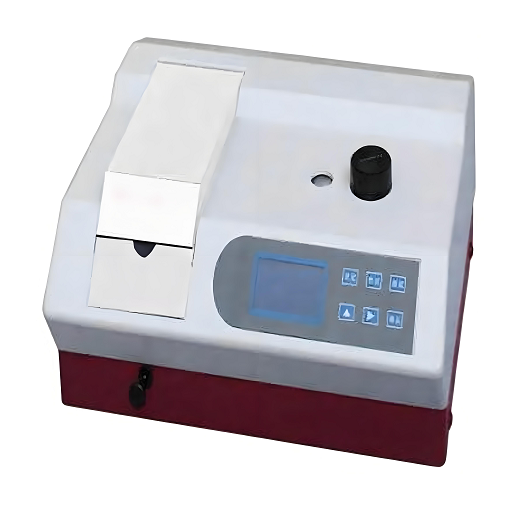
Textile formaldehyde content tester is used to determinate the formaldehyde content in the various textiles, clothing fabrics, often using water extraction method to prepare formaldehyde solution, and then after the color reaction with the Nessler reagent, the software can be tested out the formaldehyde content in textiles.
Standards
1. GB/T2912 Textiles - Determination of formaldehyde - Part 1: Free and hydrolyzed formaldehyde
2. AATCC 112 Textiles - Determination of formaldehyde - Vapor absorption method
3. BS6806 Textile formaldehyde testing
4. DIN EN ISO14184.2 Textiles-Determination of formaldehyde-Part2: Released formaldehyde (vapor absorption method)
Parameters
| Item | Specification |
|---|---|
| Wavelength Range | 190–1000 nm |
| Spectral Bandwidth | 4 nm or 2 nm (Optional) |
| Wavelength Accuracy | ±1 nm |
| Wavelength Repeatability | ≤0.3 nm |
| Wavelength Setting Method | Automatic |
| Wavelength Resolution | 0.1 nm |
| Photometric Accuracy | ±0.5% T |
| Photometric Repeatability | ≤0.2% T |
FAQs
1. What is a Fabric Formaldehyde Content Tester used for?
It is used to determine the formaldehyde content in textile and fabric samples.
2. What types of textiles can be tested?
It can be used for various fabrics, garments, and textile materials.
3. Why is formaldehyde testing important?
It helps verify textile safety, product quality, and compliance with applicable standards.
4. Is the test suitable for quality control?
Yes, it is suitable for routine quality inspection and laboratory testing.
5. Where is it commonly used?
It is widely used in textile laboratories, garment manufacturers, inspection agencies, and research institutions.